


Specialists at SLUCare now offer a minimally invasive alternative for removing blockages that could lead to strokes in patients with carotid artery disease.
The procedure, called transcarotid artery revascularization, or TCAR, is a significant new treatment option for some patients with severe carotid artery disease, says Dr. Matthew Smeds, a SLUCare vascular surgeon who practices at SSM Health Saint Louis University. He and his colleagues are among the first in the area to utilize the technology, which was approved by the FDA in 2015.

SLUCare vascular surgeons performing surgery.
The carotid arteries are the major blood vessels that supply blood to the brain. When patients have carotid artery disease, those arteries have become narrowed or blocked by fatty deposits called plaque, putting them at greater risk for stroke 鈥� the 鈥渂rain attacks鈥� that are the fifth leading cause of death in the United States.
REMOVING BLOCKAGE TO GUARD AGAINST STROKE
Strokes kill more than 140,000 Americans each year, and thousands more are left permanently disabled. Carotid artery disease is one of the major causes of stroke. Smoking, high blood pressure, high cholesterol, diabetes and obesity are all among the risk factors.
Often, patients aren鈥檛 aware they have carotid artery disease until they suffer a stroke, Dr. Smeds says. That鈥檚 why it鈥檚 important to follow your doctor鈥檚 recommendations for screenings if you have any of the risk factors.
To remove a blockage, some patients may require a surgery called carotid endarterectomy. But TCAR may be recommended for those who are considered high risk for traditional surgery because of age or other issues.
During TCAR, the physician makes a tiny incision just above the patient鈥檚 collarbone. A thin tube is inserted into the carotid artery and connected to a system that temporarily diverts blood flow away from the brain. A filter captures any small particles of plaque that break away before the blood is returned to the body via a tube in the patient鈥檚 thigh.
While the brain is protected during this temporary flow reversal, doctors deliver a stent to the carotid artery to stabilize plaque and help prevent against future stroke. Then, the blood flow is returned to normal and the system is removed.
PATIENTS GO HOME THE NEXT DAY
The critical part of the procedure, when the blood flow is reversed, lasts only about 10 minutes, Dr. Smeds says, and the entire procedure takes less than an hour. Patients typically go home the next day.

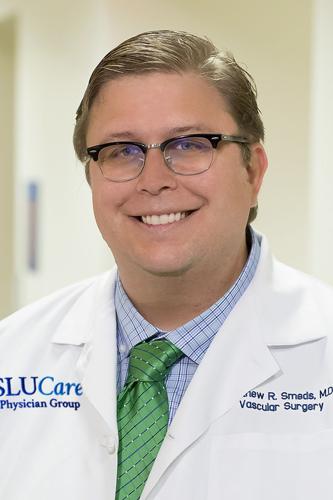
Dr. Matthew Smeds, SLUCare vascular surgeon.
鈥淎ll procedures on the carotid artery have an inherent risk of stroke,鈥� Dr. Smeds says. 鈥淏ut this has been shown to have the lowest risk of stroke of any of the other procedures. It鈥檚 the latest thing in vascular surgery.鈥�
And, because TCAR is minimally invasive, patients recover more quickly, with fewer complications, less pain and smaller scars, Dr. Smeds says.
鈥淎 lot of people have heard about the risks of other procedures,鈥� Dr. Smeds says. 鈥淭CAR has been a welcome surprise to them.鈥�
A carotid endarterectomy, or CEA, in which the surgeon opens up the artery from a larger incision in the patient鈥檚 neck, can take about two hours and carries a higher risk of complications.
In some cases, a physician might use a catheter inserted into the patient鈥檚 groin to perform carotid angioplasty and stenting. Using X-ray imaging, doctors must guide the catheter through the body to the clogged artery, where they inflate a small balloon to open up the blockage and implant a stent to help keep it open.
For more information on TCAR and SLUCare Vascular Surgery, visit .